For Homeowners
What To Look For: Chimney Warning Signs
Most of these you can spot from the ground — just walk outside and look up. If you notice any of them, remember it's usually three to five times worse up on the roof. When in doubt, have it checked.
A cracked collar and a stuffed gutter
The collar — the mortar wash at the very top of the brick — is cracked here, which lets water work its way in. The gutter below is packed with debris, and a stuffed gutter can lead to water damage, pull away from the house, and give bugs a place to settle. Both are easy to miss from the ground.
A broken crown up top
This kind of damage can usually only be seen from the roof. Once the crown — the concrete top of the chimney — cracks, snow and water seep into the gaps, and freezing and thawing slowly pry the chimney apart. It's worth repairing sooner rather than later.
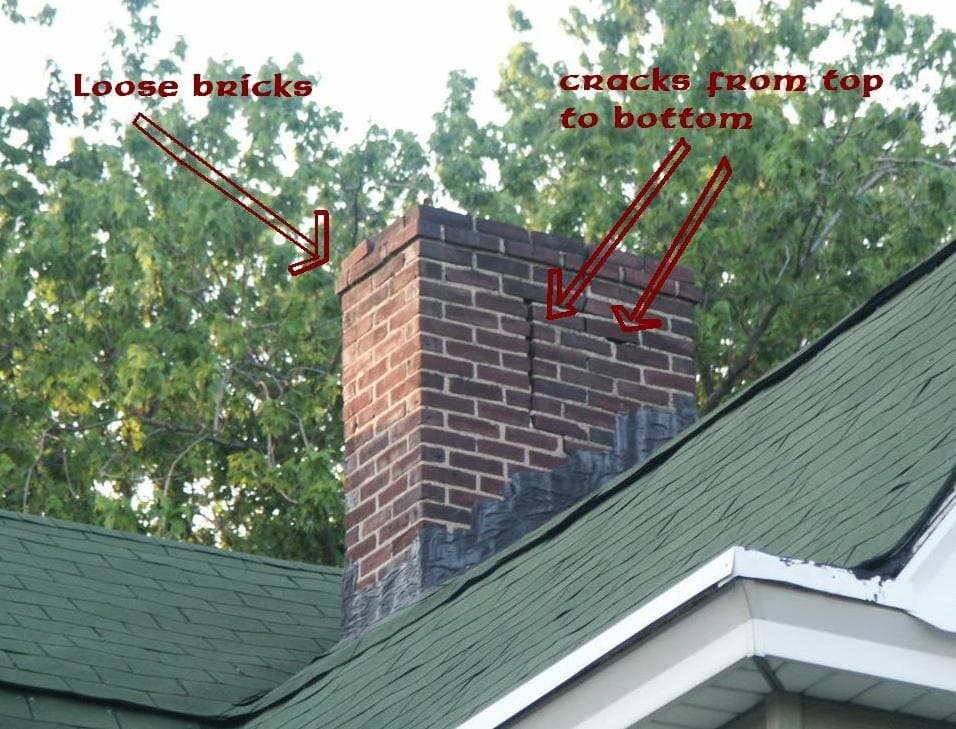
Cracks and loose bricks
Cracks that run from top to bottom and bricks that have worked loose near the top are signs the chimney is beginning to come apart. Caught early, it's a straightforward repair; left alone, it tends to spread.
Crumbling brick and mortar
Up close you can see the brick faces cracking and the mortar joints washing out. If the joints look dark or open from the ground, it's usually three to five times worse once you get up on the roof — so it's worth having someone take a look.
Brick that's shaling and flaking
When brick starts to shale and flake apart like this, patching won't hold for long. The soundest fix is usually to take the chimney down to a solid level and rebuild it — often painted to match so it blends right back in.
Flashing that needs repair
Flashing is the metal seal where the chimney meets the roof. When it fails, water gets into the attic and the roof below — sometimes enough that the roof has to be replaced. A sound flashing seal is one of the simplest ways to keep water out.
An antenna strapped to the chimney
An antenna bolted to a chimney catches the wind and moves in bad weather, and over time that working motion loosens the masonry. The flashing at the base here is cracking too. If an old antenna is still up there, it's usually better off removed.
Open flues and tar on the crown
These flues have loose wire screens instead of proper caps, and animals can still slip through — a cap is the right fix. The black tar smeared across the crown is flammable and doesn't belong there. (A small bat had even been living in the brickwork.)
Vines growing on the chimney
Vines look charming, but they hold moisture against the masonry, work into the mortar joints, and damage the face of the chimney over time — and they give bugs an easy way in. Keeping them off the chimney saves a lot of wear.
Cheap, glued-on caps
A cap is only as good as the way it's attached. Caps that are simply glued on can work loose and blow off in a storm, leaving the flue wide open again. Dan doesn't depend on glue — a cap should be properly fastened so it stays put.
Ready to Get Started?
Call today — Dan will take a look and give you an honest quote.